Richardson Studies: Restoring Faith-Based Education to Defend Ancient Christianity, Build Strong American Families, & Defend Western Civilization
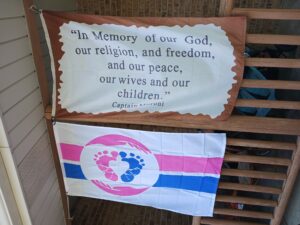
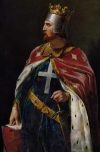
Richard the Lionheart was a great hero of the Middle Ages. He stood up for Christianity and laid his life on the line to heroically recover lands and peace in the name of God. He developed the 3-lion flag, a reminder that we should not stand down and let the enemy devour us. Let us have convictions firm enough to stand for! Richardson Studies is dedicated to his memory and aims to help many to become ‘sons of Richard,’ taking up the cross of Christ, and joining in the holy fight for faith family and freedom!


Defend western civilization. Today western civilization is under attack, and resistance to the secular anti-Christ takeover of society is an imperative duty to God. Let us use our minds and our words, and when necessary our arms, to bring back a holy society. We must hold on to our legacy of freedom and faith by doing everything in our power to teach truth. If we don’t fight the rising tide of secularism and anti-Christian influences, we will lose everything.
Defend the restored gospel. Richardson Studies provides many resources on teachings of Latter-day prophets and doctrine. You don’t have to be a Latter-day Saint to benefit from this organization but the author and many of its followers are Latter-day Saints. The restored church is under attack from without and within. The Christian conscience calls us to stand and give aid to those who are “kept from the truth because they know not where to find it!” True Christians will learn to defend the name of Joseph Smith as they see his true character and mission to prepare the world for the return of Christ.
Defend faith-based education. Our schools have long been under attack. Many have forgotten that in our founding era, children’s books were full of the Bible and moral teachings. Today, popular theories of men like Darwinism, Marxism, communism, and wokeism shamelessly violate and scorn God’s word and our Christian heritage in America, defiling sacred ground. Let us return to placing God’s word at the forefront of education, not thinking ourselves wiser than God! The only hope for a world in chaos is to bringing back a faith-based worldview! We will do this together, one essay, one book, and one student at a time. Let us be like Paul, constantly looking for ways to teach and strengthen society through truth.
Contact Nathan Richardson to contribute writings and to share teachings from Richardson Studies. Editor@RichardsonStudies.com.

See Nathan’s Books on Amazon.
Videos on YouTube.
Facebook posts.
News Feed of Current Event Articles of Importance.
Richardson Studies is an educational non-profit operation promoting faith-based research & philosophy operated by R. Nathan Richardson, a member of The Church of Jesus Christ of Latter-day Saints.
Nate is from Utah and works as a private school teacher. He has written on many faith-based topics for over a decade. He served a 2-year proselyting mission in English and Spanish in the south. He studied at BYU. He continues to look for truth from wherever it can be found and finds joy in teaching.
Nate’s views center around teachings of ancient and modern prophets, putting the word of God and His servants as the compass that leads to truth. We live in a world filled with good, but also filled with lies and deceit. We can’t just take mainstream views as fact. A little digging is needed, and a moral compass must be in place. Nate’s mission now is to help people find resources on the quest for truth and understanding in a world where there is so much confusion.
Much of Nate’s work summarizes findings of others and adds faith-based commentary. The following are some guidelines for working in the creative commons to share ideas without violating anyone’s intellectual property rights:
Creative Commons Partial Copyright & Related Information
Richardson Studies is an educational non-profit operation, and all materials thereof are free to the public. I place all my writings under a Creative Commons license, allowing electronic files to be shared by others for educational purposes with attribution (CCBY-SA). My writings are provided free through the website RichardsonStudies.com as blog posts and eBooks. For convenience, much of my work is available in print via Amazon.com at base printing costs.
Fair Use law allows for some sharing of portions of others’ work for educational and analytical purposes with attribution. I have made every effort to ensure my writing is properly done in keeping with various components of Fair Use law as follows:
Educational Non-profit: I do not financially benefit from the writings I publish. My objective in sharing my writing is to educate. My writings are unique and do not detract from the efforts of other authors whom I highlight and analyze.
Factual Non-Fictional Nature: My writings deal with facts of history and other subjects. Basic facts do not belong to anyone and can and should be shared. It is in the public interest for facts of history, science and other academic fields to be presented. Much of the work I highlight is to share the facts and principles presented in those works rather than their specific artistic qualities. My interest in the works of others involves trimming out the fat and focusing on fundamental ideas. It is a fun experience to read books with extra stories and other artistic elements, but there is a place for drilling down to the basic core ideas which are most important, which is where I come in.
Selection & Abbreviation: I select certain parts of books which are particularly meaningful to me and which I believe others would particularly benefit from. This said, my highlights of other books should not be considered a summary as they do not offer a balanced presentation of the whole picture of the book in treatment – I merely bring out a few fascinating points of interest to myself. My works are much smaller than the books I treat, like turning books into essays. My publications make clear where I get various ideas. I do not claim the work of others as my own. As I take notes on works of other authors for my work, I typically paraphrase those writings rather than directly quote them, unless indicated by quotation marks.
Creative New Product & Unique Brand: I make a new product by how I make certain information available, what I add to it, what I leave out of it, what I compare it to, which parts I emphasize, and so forth. My work does not take away from the revenues of other authors even when ideas from other authors are treated. My audience takes interest in my writing because of my worldviews which I demonstrate in the writings. Those interested in the work of other authors will do better to read those authors directly rather than my highlights and analysis. My audience has familiarity with my writing style and focus, and looks to my writings for a specific experience, not available in merely reading works of others which I sometimes highlight. My writings do not diminish the value or sales of the authors I treat.
Comparison & Analysis: I compare aspects of authors’ writings with what others have written and with my experiences and perspectives. I comment on the ideas presented and provide additional meaning and context to expand upon various ideas. I identify things the author claims which I specifically disagree with and why. I contribute perspectives from my experiences and my membership in The Church of Jesus Christ of Latter-day Saints, though my work does not represent any group.
Attribution & Representation: When referring to teachings of others, I make it clear which ideas are mine and which were inspired by other authors. When doing book highlights, I typically separate my commentary in new paragraphs indicated by “Note:…End note.” I do not claim to represent other authors or their work. I do not claim to be an official representative of the church I belong to or any other organization. All my writings express my personal views. When I paraphrase writings of others, those writings do not represent the authors I paraphrase.


LONG LIVE CHARLIE KIRK!


“FIGHT! FIGHT! FIGHT!”
“Communism is a loser and it always will be. The communist system is the opposite of the American system and the communist system has never worked. Our warriors did not fight communism on battlefields across the world only to have that menace rear its ugly head right back here in America. We’re not going to let it happen. We’d like to stop a threat like that immediately and before it begins. It’s like a cancer. You got to cut it out. You got to cut it out fast.” (Donald Trump’s 2026 Independence Day speech Against Communism, about 22 minutes in https://youtu.be/lhk-MEecH1w?is=Sc7MGtrKmuIa8NU8)
RIGHTLY DIVIDE THE WORD OF TRUTH
BE READY ALWAYS TO GIVE AN ANSWER TO EVERY MAN THAT ASKETH